

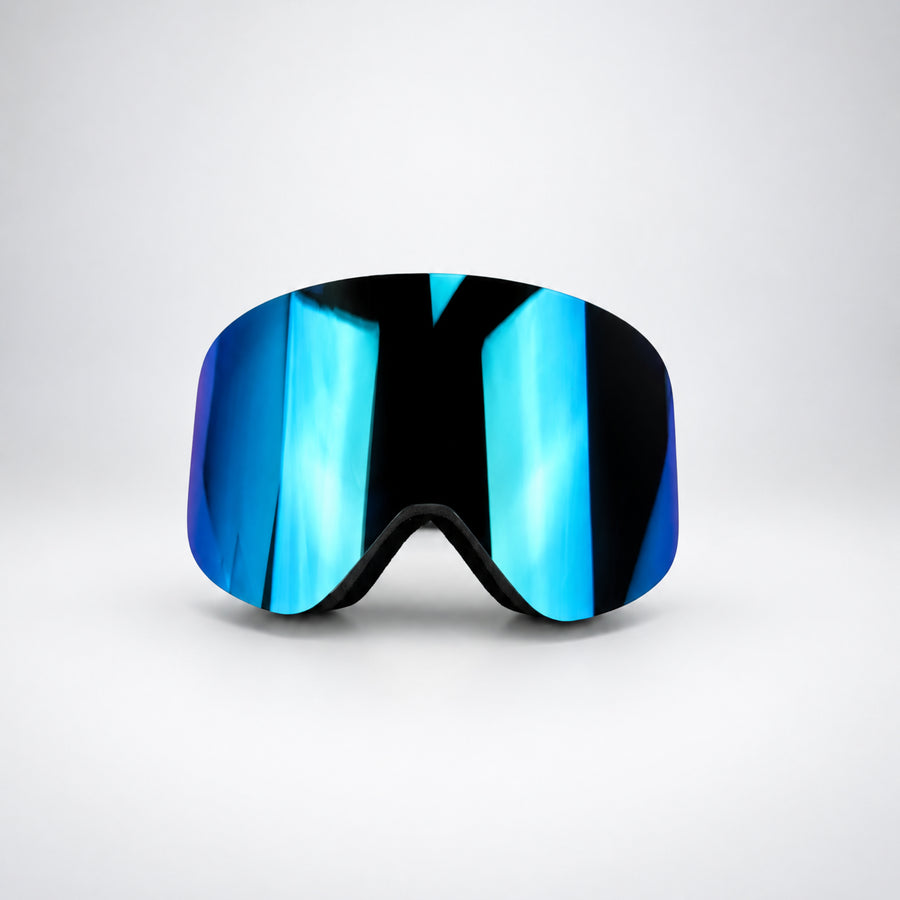
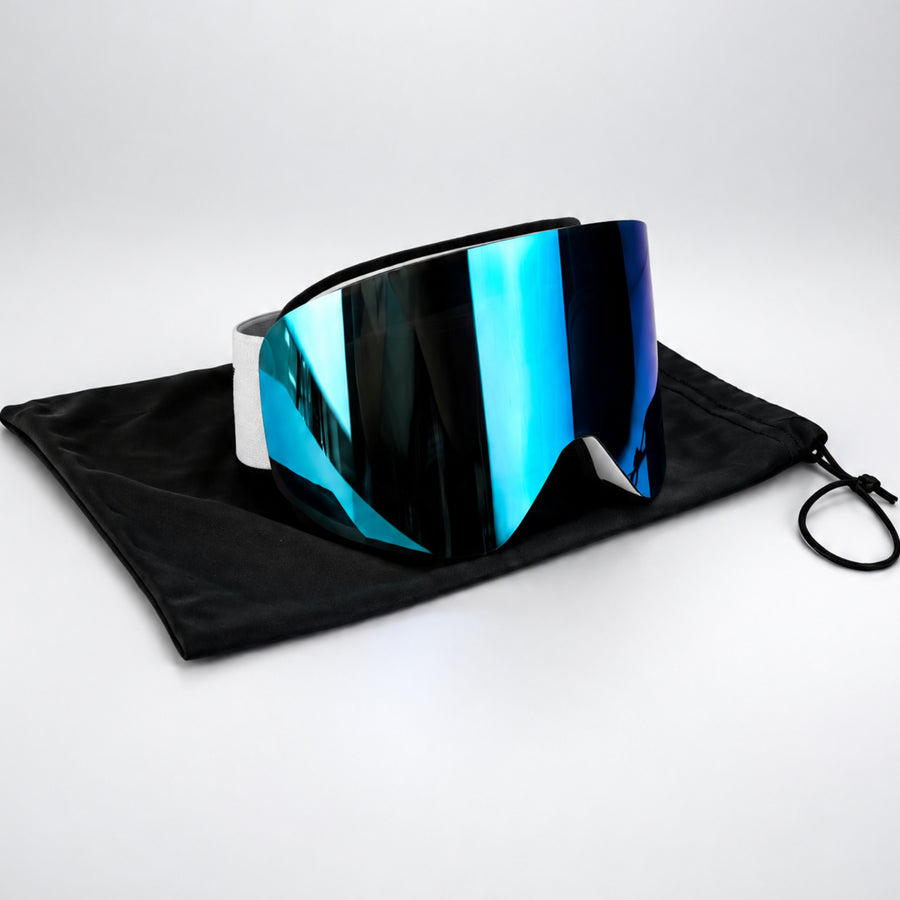


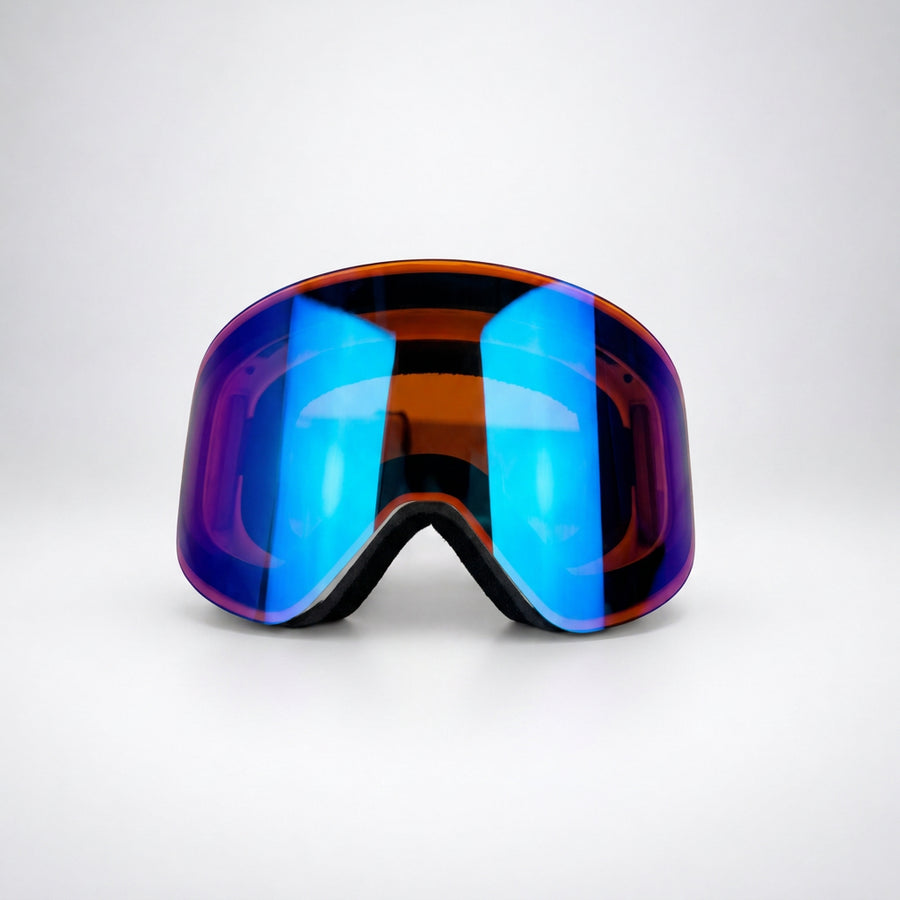
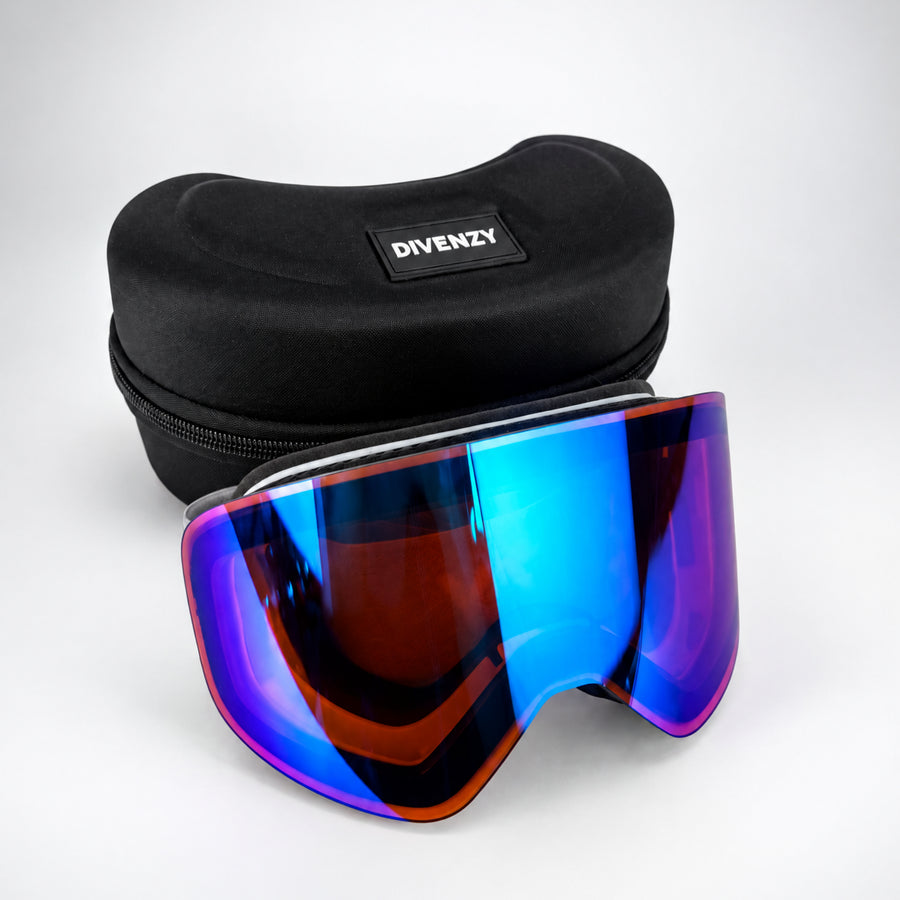

Lens categories: how dark should your lens be?
The most important number on a ski goggle is the share of visible light the lens lets through. It is called visible light transmission (VLT) and sorts lenses into categories 0 to 4. The darker the lens, the higher the category.
| Category | Light let through | Best for |
|---|---|---|
| 0 | 80–100% | Night skiing, very poor visibility |
| 1 | 43–80% | Overcast skies, snowfall, flat light |
| 2 | 18–43% | Changing light, partly cloudy days |
| 3 | 8–18% | Bright sun and high altitude |
| 4 | 3–8% | Extreme brightness, glaciers |
If you ski mostly on sunny days, a category 3 lens is the classic choice. If you ride in all weather, a category 2 lens covers the widest range. Many skiers own two lenses or two goggles for this reason.
Mirrored and Revo lenses explained
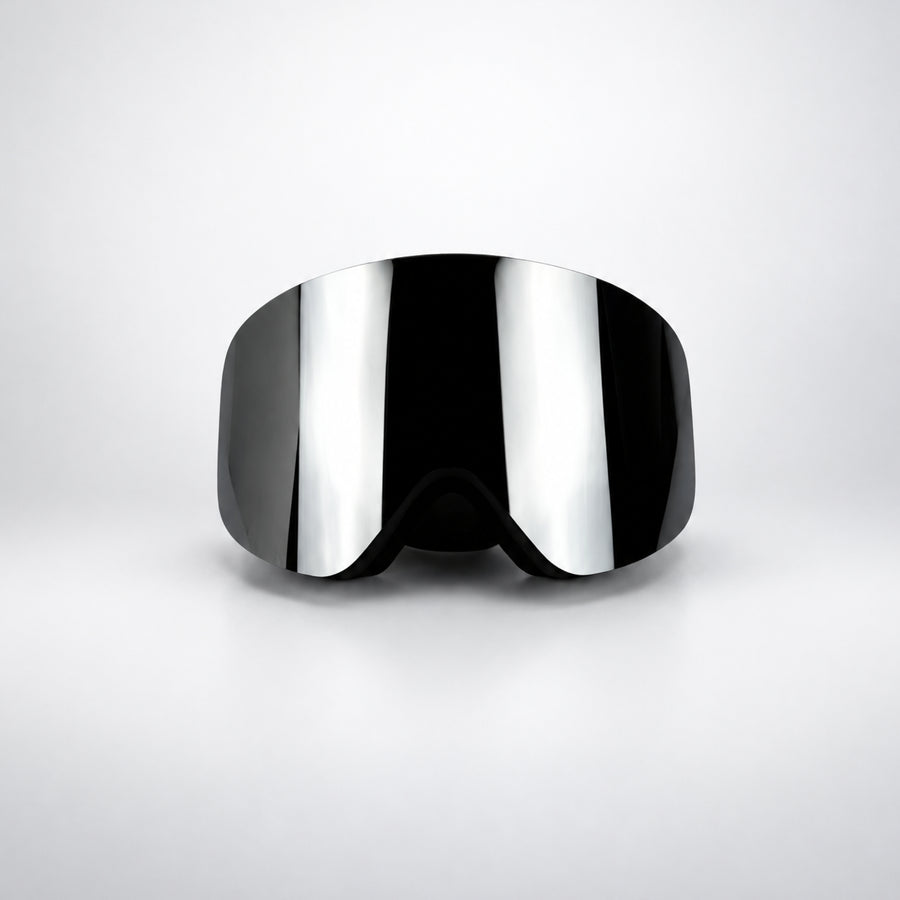
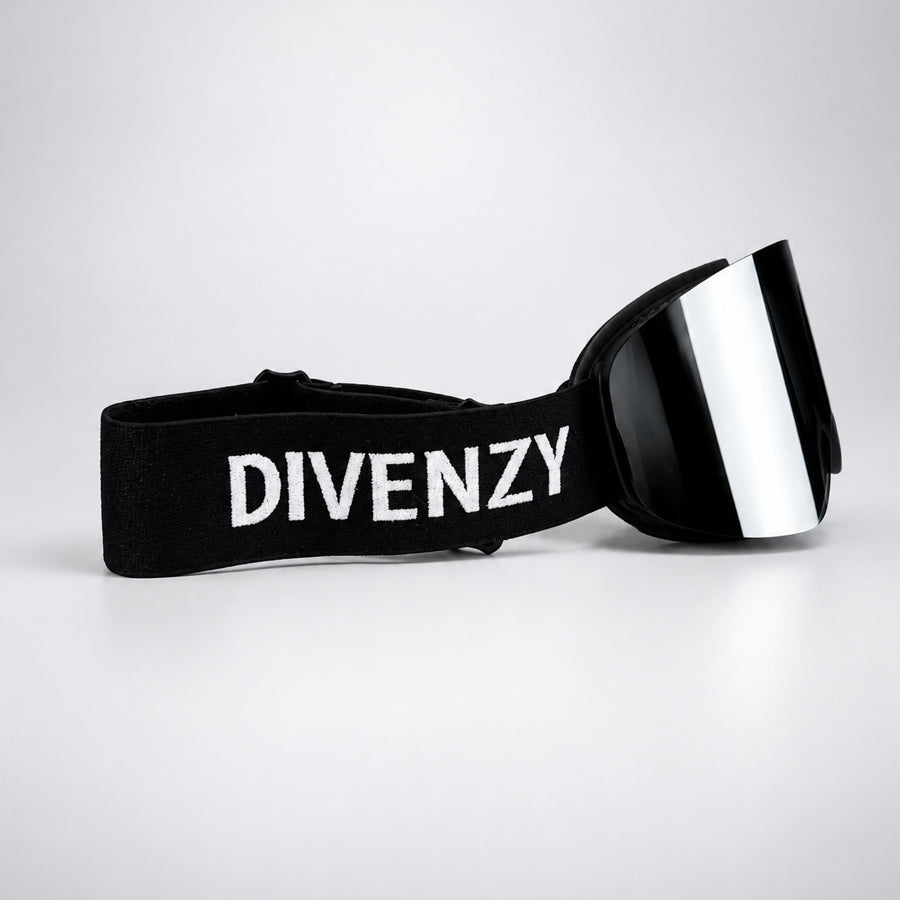
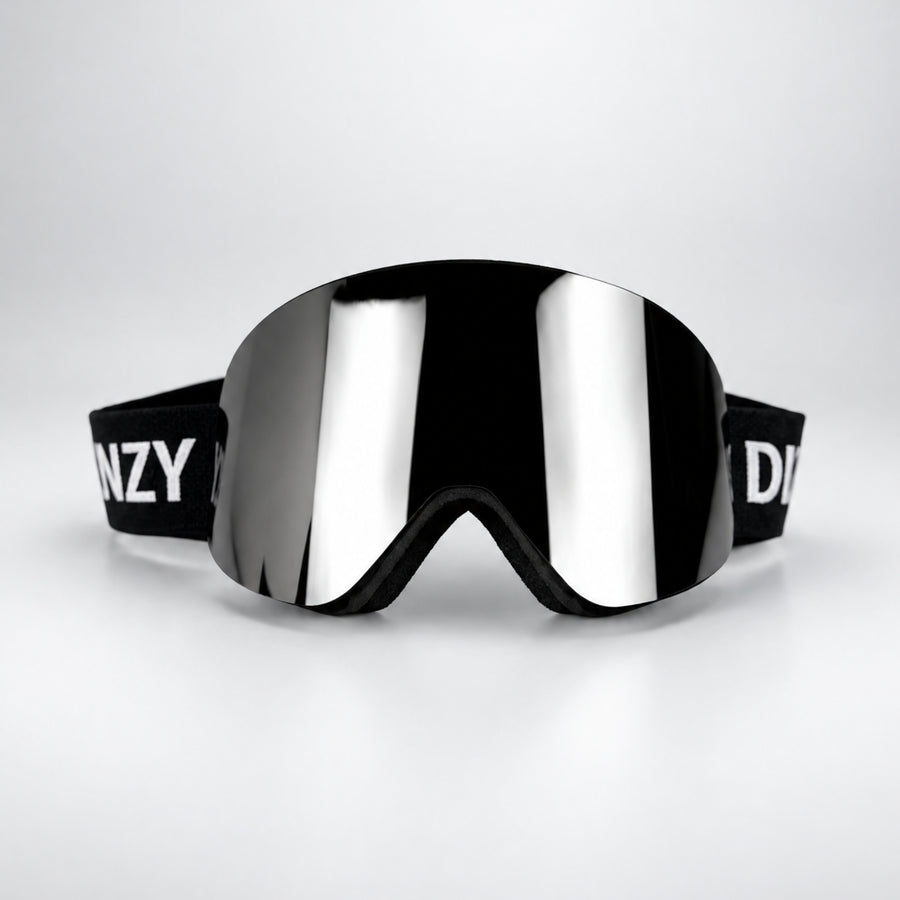
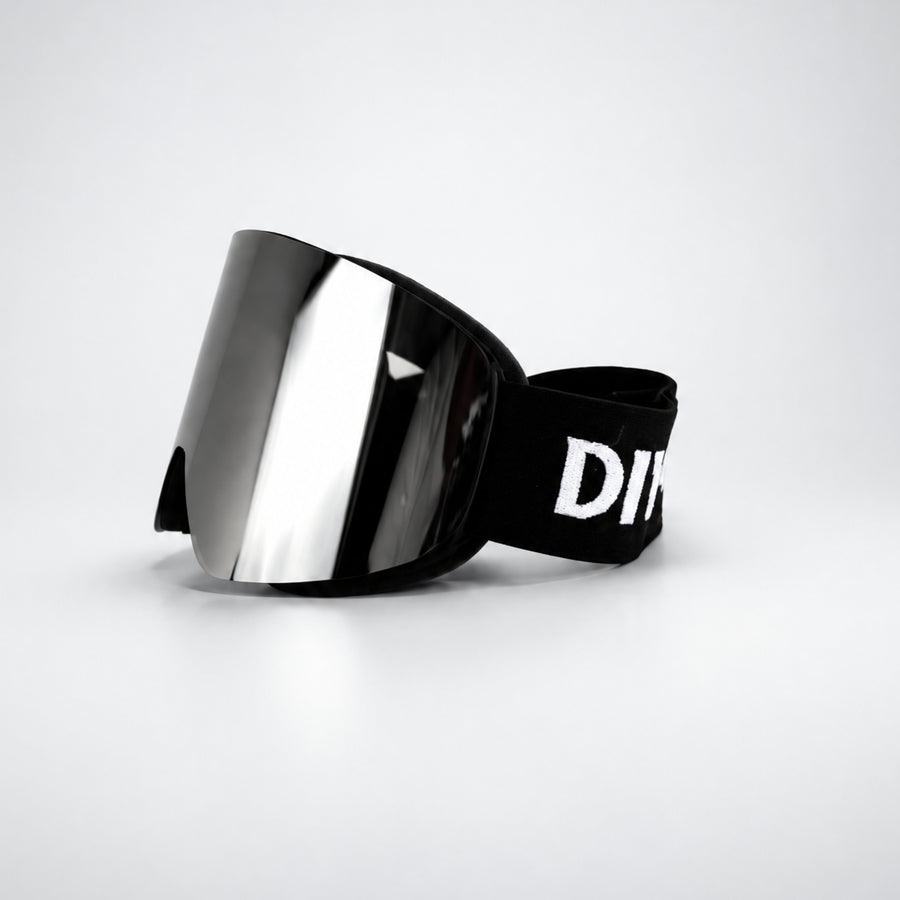
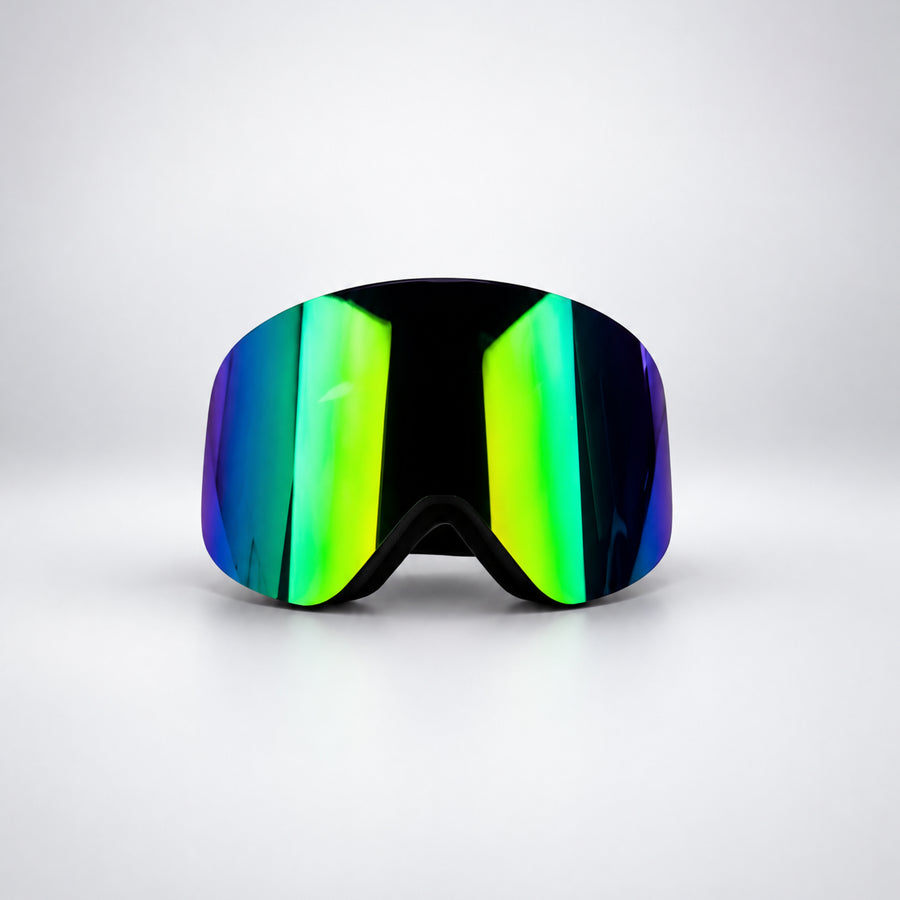
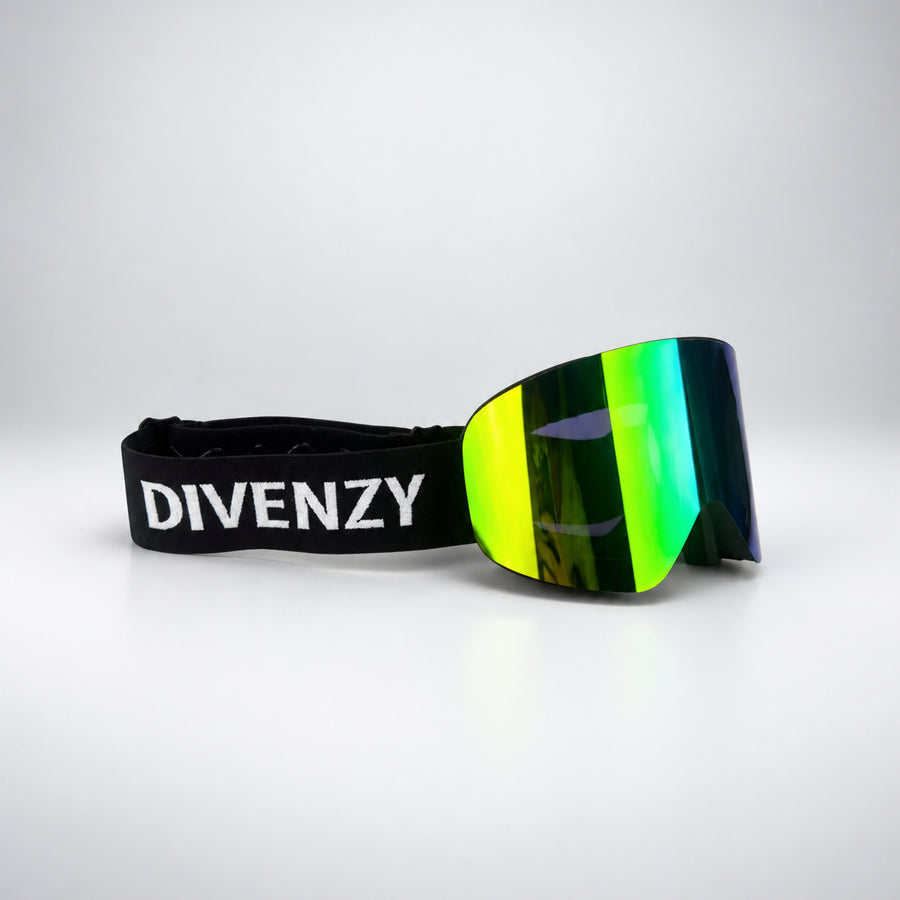
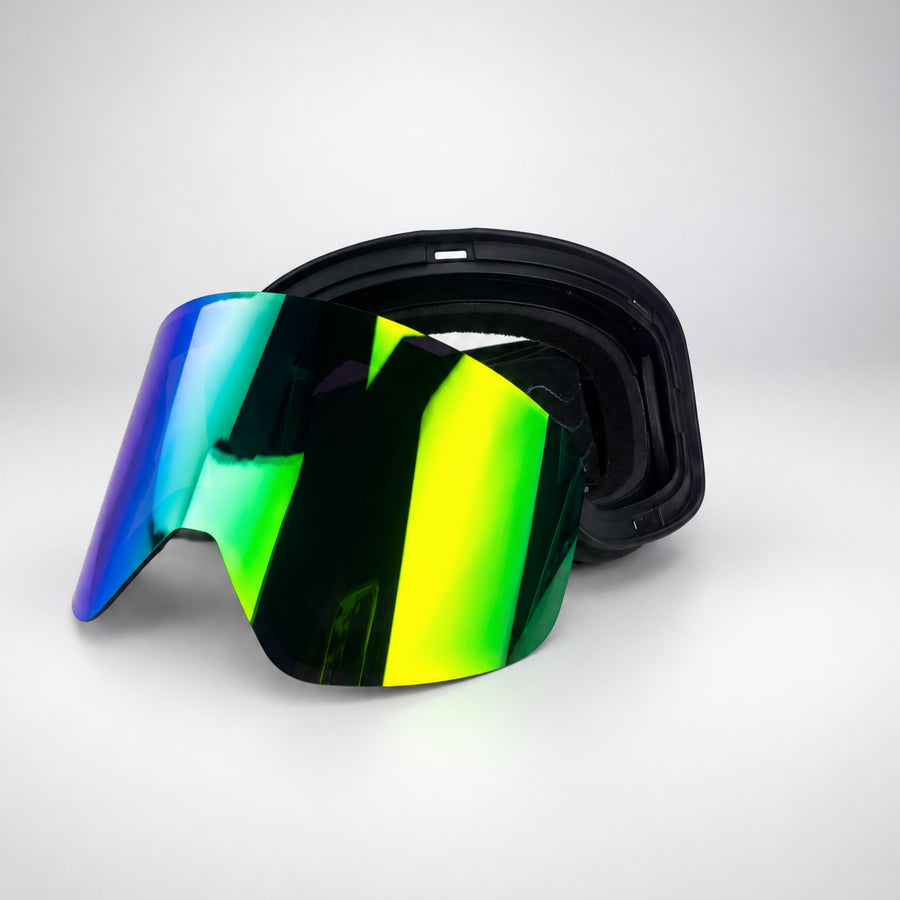
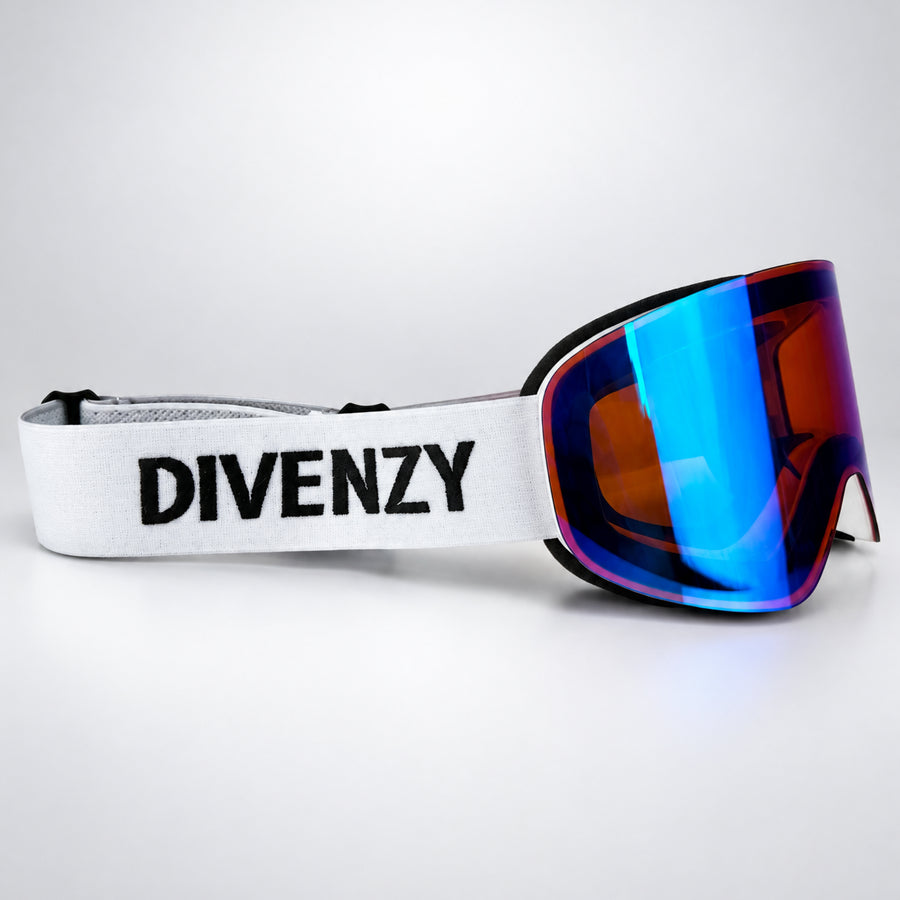
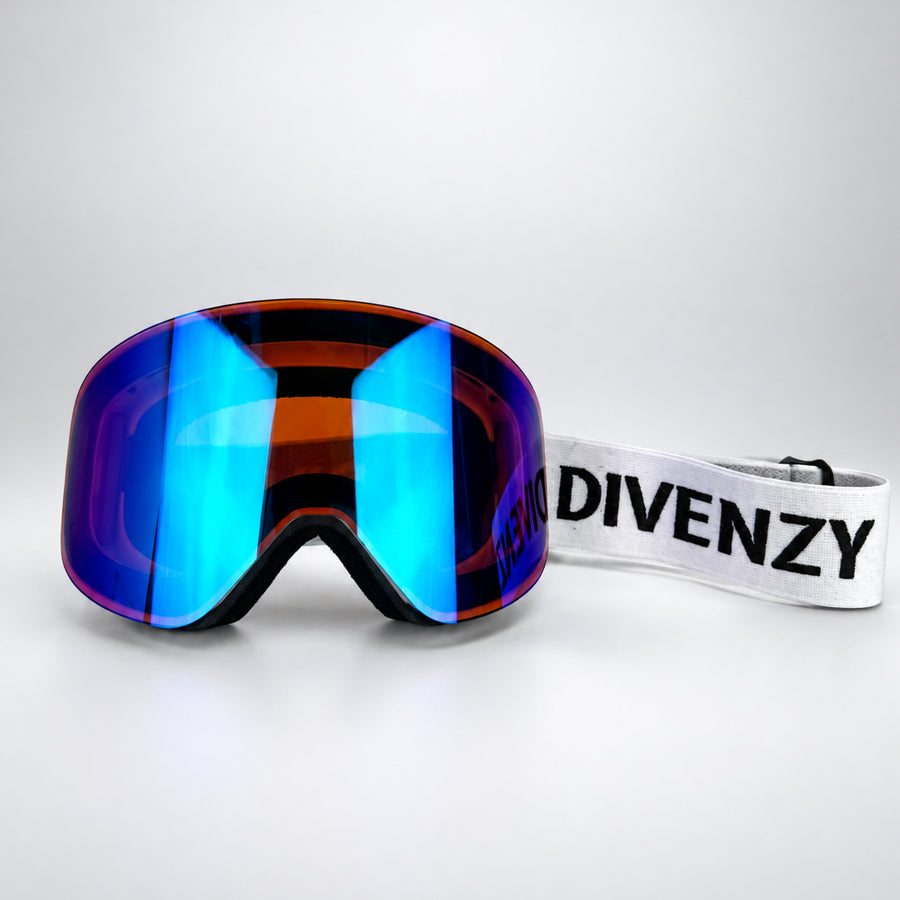
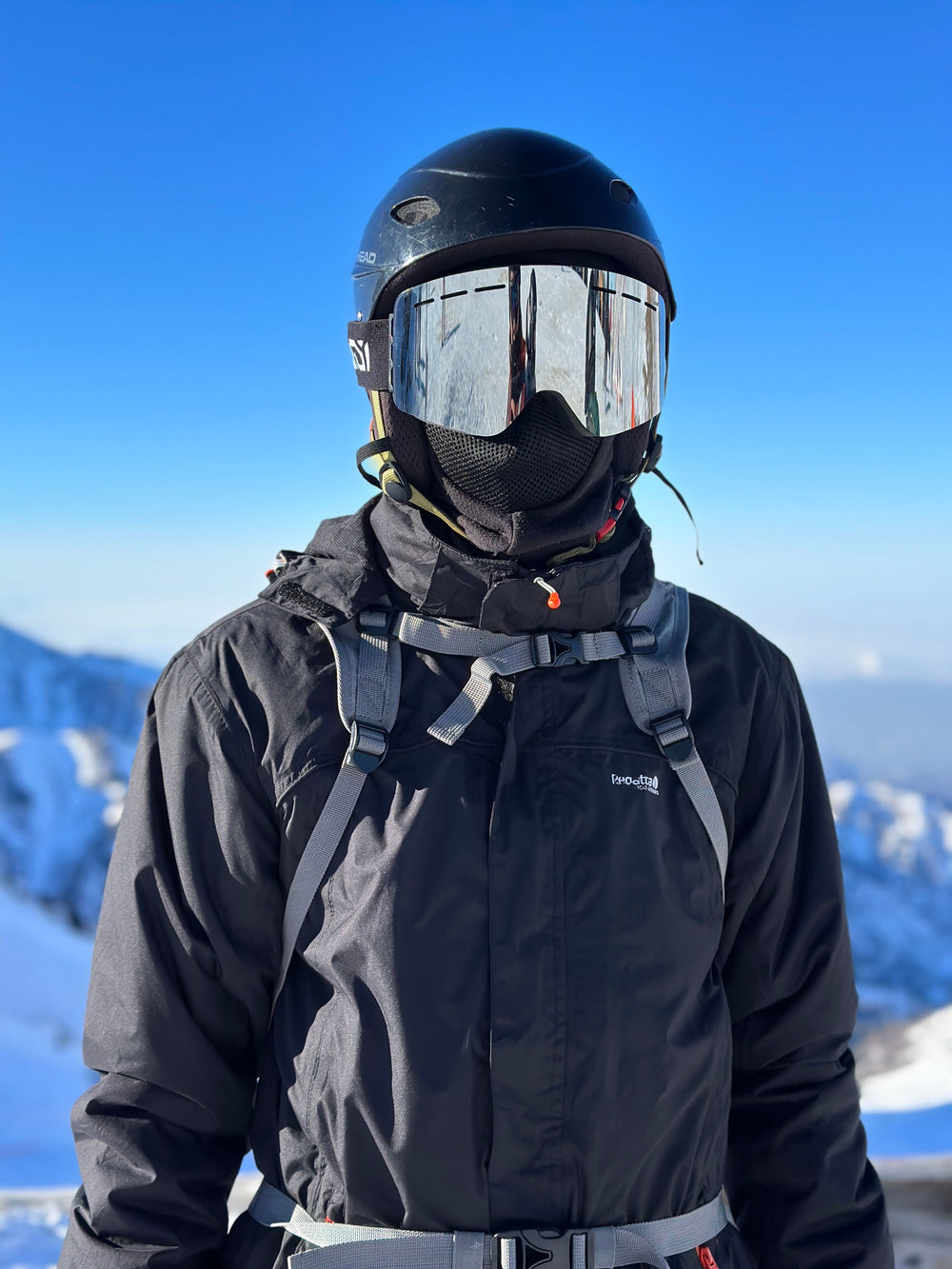
A mirror coating is a thin reflective layer on the outside of the lens. It bounces part of the light away before it reaches your eye, which reduces glare and makes bright days more comfortable. Revo-style coatings do the same job with a colored finish – yellow-green, ice blue, pink and more – so the look of the goggle changes with the coating.
Mirror coatings are a great fit for bright, sunny conditions. On flat, overcast days, a lighter lens usually gives you better contrast.
UV protection: why it matters more on the mountain
Fresh snow can reflect up to 80% of UV radiation, and UV intensity rises roughly 10–12% with every 1,000 metres of altitude. Your eyes are hit from above and from below. Look for goggles that state full UV protection (often written as UV400, which means light up to 400 nm is blocked) and that back the claim with a lab test report.
Our approach: we only state what we can document. Test reports for the DIVENZY first edition are published in the Protection & certification section as soon as they are issued.
Fit and helmet compatibility
- The goggle should sit flush on your face without gaps at the forehead or cheeks.
- It should not press on your nose or cheeks – pressure points become painful after a few hours.
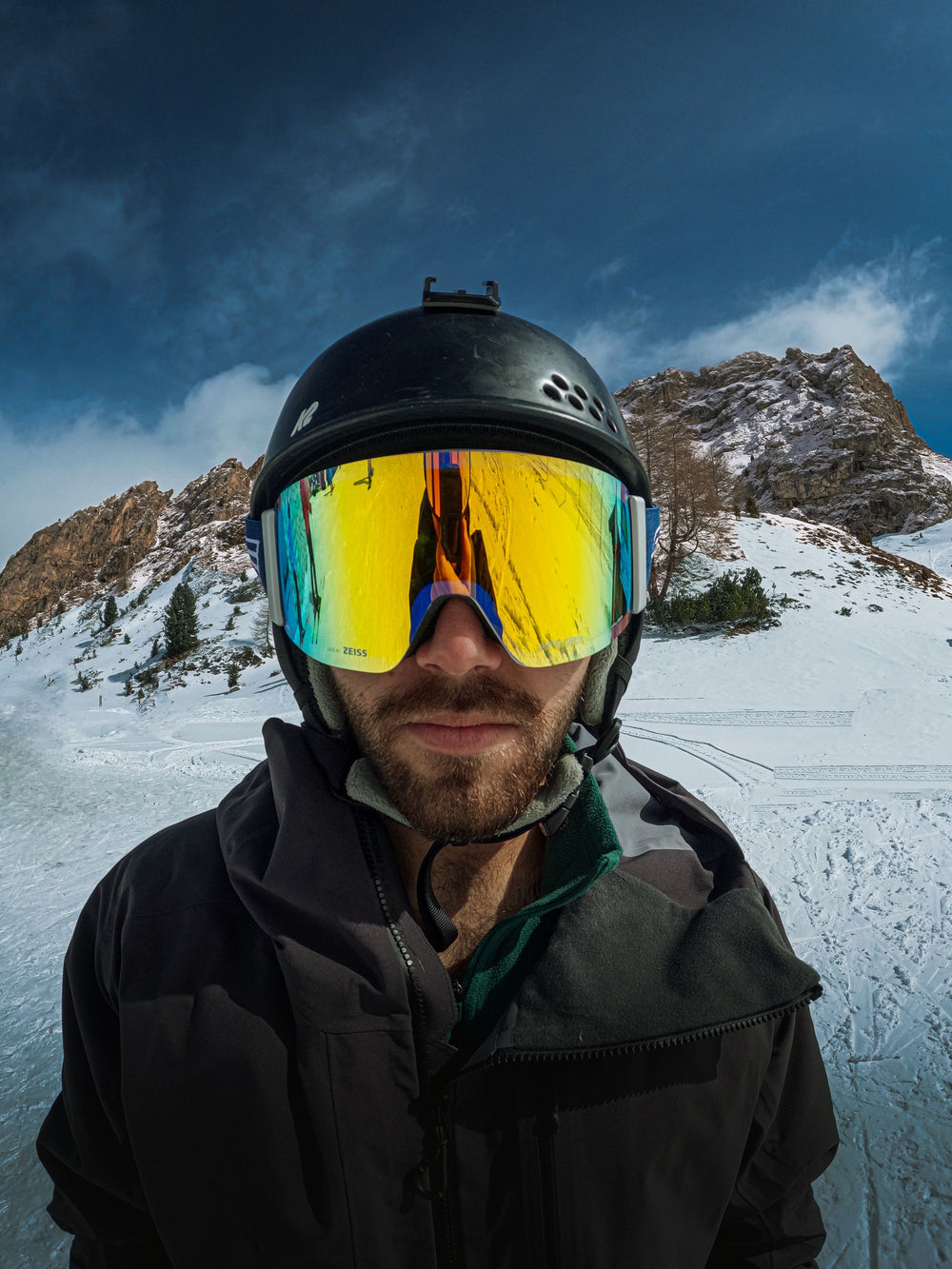
- The strap should sit over the back of your helmet, not under it.
- The best test is to try goggles on with your own helmet, because helmet shapes differ.
Fog and ventilation
Fog appears when warm, moist air from your face meets a cold lens. Good ventilation, a dry foam seal and an anti-fog treatment all help. A few habits help just as much: do not wear your goggles on your forehead when you are warm, do not wipe the inside of the lens, and let them air-dry after use.
Standards and certification in plain words
- CE mark: in the EU, ski goggles count as personal protective equipment (PPE) under Regulation (EU) 2016/425. The maker declares conformity and keeps technical documentation.
- EN ISO 18527-1: the European standard for ski goggles for alpine skiing, covering optical quality, impact and more.
- ISO 12312-1: the standard for sunglasses and the origin of the lens categories above.
How to care for your ski goggles
- Shake off snow and let the goggle dry at room temperature – not on a radiator.
- Clean the outside with a clean microfiber cloth; never rub dry grit across the lens.
- Do not wipe the inside surface. Let it air-dry instead.
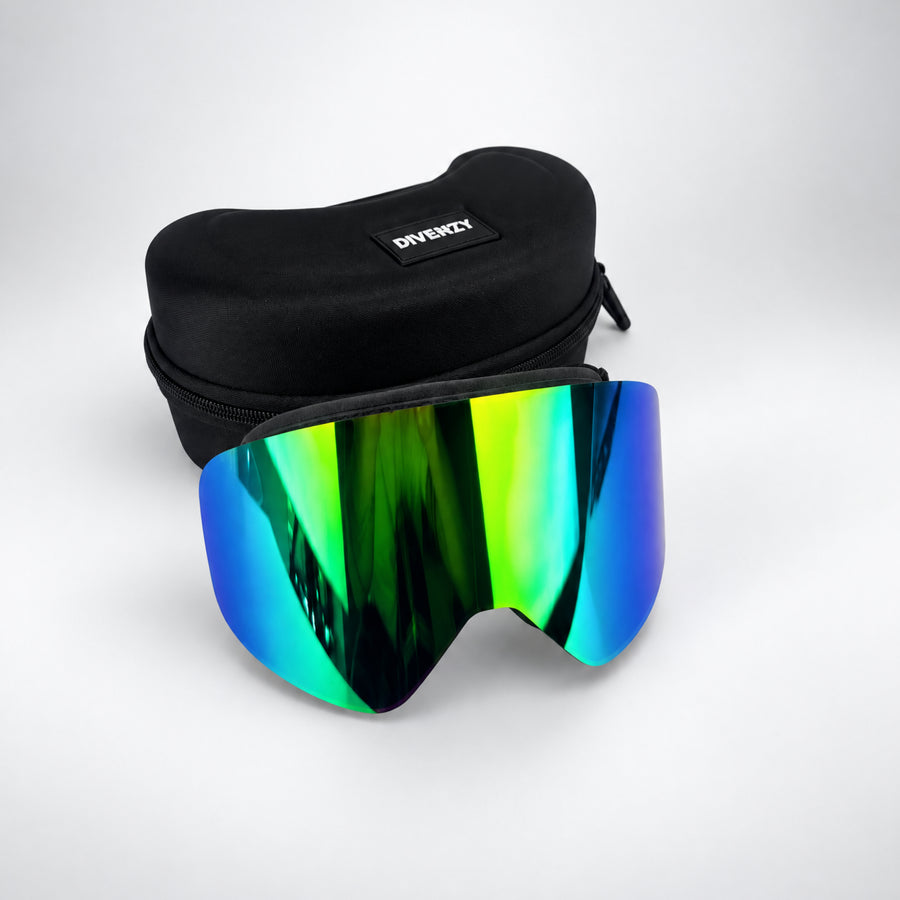
- Keep the goggle in a soft pouch or case so the lens does not scratch.
- Keep sunscreen, solvents and heat away from the lens and coating.